

Now that Olive knew about the hidden dangers and was ready to make lifestyle changes, Dr. Lee, her ophthalmologist, called her in for a lesson on proper eye care. “Olive, taking care of your eyes is the first and most important step in managing your TED,” Dr. Lee said, leading her to a comfortable exam room. “Your eyes are feeling dry, stinging, and puffy because of the inflammation, and proper care will help ease those symptoms and prevent further damage. Let’s go over the basics together.”
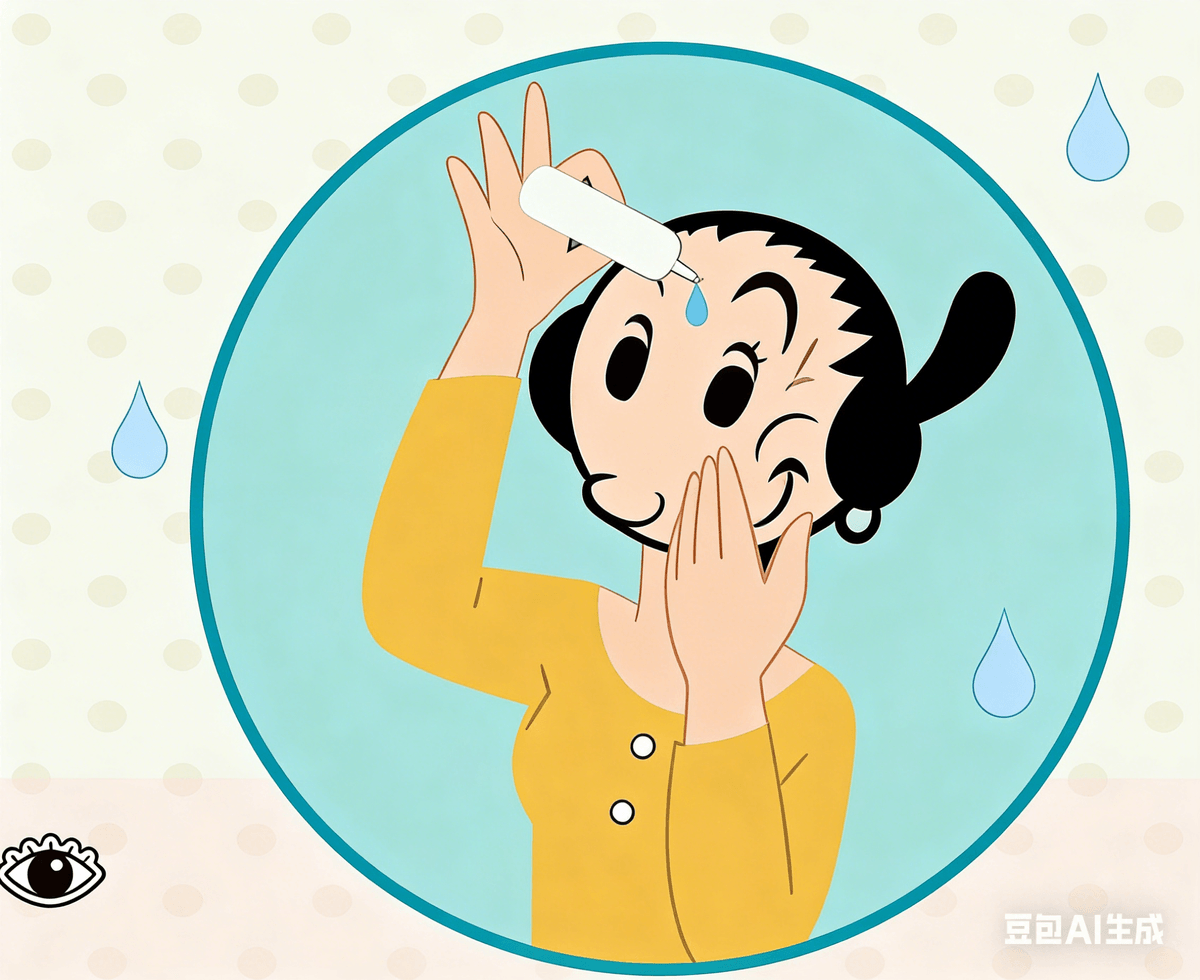
Dr. Lee started by showing Olive a small bottle of eye drops. “First, artificial tears,” she said. “These are preservative-free eye drops, which are gentle on your eyes and won’t cause irritation. You need to use them 4-6 times a day—every 2-3 hours—to keep your eyes moisturized. Dry eyes are a common symptom of TED, and if left untreated, they can damage your corneas (the clear outer layer of your eyes). Keep the bottle with you at all times, and use it whenever your eyes feel dry or stinging.”
Olive took the bottle, looking at the label. “Preservative-free, got it,” she said, nodding. “Do I just put one drop in each eye?” “Yes, one drop in each eye every time,” Dr. Lee said. “Make sure you don’t touch the tip of the bottle to your eye—you don’t want to get it dirty or cause an infection.”
Next, Dr. Lee showed Olive a tube of eye ointment. “This is a thick, greasy ointment that you’ll apply at night before bed,” she said. “It’s more moisturizing than the eye drops, and it will protect your corneas while you sleep. When you sleep, your eyes don’t blink as much, so they dry out more easily. The ointment will form a protective layer over your eyes, keeping them moist all night long. Just squeeze a small amount onto your fingertip and gently apply it to the inside of your lower eyelid.”
“That sounds messy,” Olive said, laughing a little. “It might feel a little greasy at first, but you’ll get used to it,” Dr. Lee said, smiling. “And it’s worth it—your eyes will feel so much better in the morning. No more waking up with dry, crusty eyes.”
Dr. Lee then moved on to sunglasses. “You need to wear UV-protective sunglasses every time you go outside—even on cloudy days,” she said. “The sun’s UV rays can irritate your eyes, and the wind and dust can make the dryness and stinging worse. Look for sunglasses that block 100% of UVA and UVB rays—they don’t have to be expensive, just effective. You can even get wraparound sunglasses to protect your eyes from the sides.”
“No rubbing your eyes,” Dr. Lee said, her tone firm but gentle. “I know it’s tempting when your eyes feel itchy or stinging, but rubbing them pushes your eyeballs further forward, which makes the bulging worse. It can also cause scratches on your corneas or lead to an infection. If your eyes feel itchy, use your artificial tears instead—they’ll help soothe the itch without causing harm.”
Finally, Dr. Lee talked about sleeping with an elevated head. “When you sleep, fluid can build up around your eyes, making the swelling worse in the morning,” she said. “To prevent that, sleep with your head propped up on 2-3 pillows. This will help the fluid drain away from your eyes, so you’ll wake up with less puffiness. It might feel a little strange at first, but you’ll get used to it, and your eyes will thank you.”
Olive took notes as Dr. Lee spoke, making sure she didn’t miss anything. “Let me repeat that to make sure I got it right,” she said. “Artificial tears 4-6 times a day, eye ointment at night, sunglasses outside, no rubbing, and sleep with my head elevated. Did I miss anything?” “That’s perfect, Olive,” Dr. Lee said, smiling. “You’re a quick learner.”
To help her remember, Olive made a little chant: “Eye drops on time, ointment at night; shades on, no rubbing; head up, eyes take flight.” She repeated it a few times, and Bluto joined in, making her laugh. “That’s a great way to remember,” Dr. Lee said. “If you stick to this routine, you’ll start to feel better in just a few days.”
Over the next few days, Olive followed Dr. Lee’s advice strictly. She kept the eye drops in her purse and used them every few hours, applied the ointment before bed, wore her sunglasses whenever she went outside, and slept with her head propped up on three pillows. Sure enough, her eyes started to feel better— the stinging and dryness eased, and the morning puffiness was less severe. “It’s working!” she told Bluto excitedly. “I can’t believe how much better my eyes feel already.”
Basic care for thyroid eye disease (TED) is crucial for alleviating eye symptoms and controlling disease progression. Key points include: 1. Local moisturizing: Use preservative-free artificial tears during the day to replenish tears and relieve dry eyes; use eye ointment at night to protect the cornea and reduce swelling; 2. Avoiding irritation: Wear UV-protective sunglasses to block strong light and wind; avoid rubbing your eyes to prevent infection and worsening of exophthalmos; 3. Reasonable eye use: Control the time spent using electronic devices, take regular breaks, and relieve eye fatigue; 4. Reducing swelling: Elevate the head of the bed 15-20° before bedtime to use gravity to reduce periorbital edema.