

In the harbor kindergarten, there’s a cute little boy named Tommy, five years old—a lively “little sailor.” Every day, he likes to run and play on the kindergarten playground, waving his little fists like Popeye, saying he wants to guard the harbor just like Popeye. But half a year ago, Tommy suddenly got sick—he had recurring skin rashes, fevers, and fatigue. He no longer had the strength to run and play, and even going to kindergarten normally became a luxury—he had childhood systemic lupus erythematosus.

Tommy’s mother stayed by his side every day. Seeing her child in pain, her heart was broken. She took Tommy to hospitals big and small. The doctor said that traditional immunosuppressants could relieve symptoms, but they had strong side effects and would affect the child’s growth and development. Tommy’s mother never dared to let her child take them for a long time, so she could only watch Tommy grow more and more depressed.
That day, Popeye, Olive Oyl, Bluto, and Dr. Schett went to Tommy’s house to help this cute “little sailor.” Pushing open the door, Tommy was lying in bed, pale, with rashes all over his body. Seeing them come in, he only smiled weakly, too tired to speak. Tommy’s mother, her eyes red, grabbed Dr. Schett’s hand tightly: “Dr. Schett, please save my child. I can’t bear to see him suffer like this.”
Dr. Schett gently touched Tommy’s head, speaking softly: “Don’t worry. We will help Tommy. Childhood autoimmune diseases are different from adult ones. Children’s immune systems are still developing and highly plastic. Immune tolerance induction therapy has few side effects and doesn’t require taking a lot of medicine, making it very suitable for children. It can help Tommy’s immune system rebuild tolerance, get rid of the illness, and won’t affect his growth and development.”
Popeye also smiled: “Tommy, you have to be brave like a little sailor. This treatment is like me eating spinach every day to get strength. As long as you stick to it, you’ll get better slowly. You’ll go back to kindergarten, run and play with the other kids, and guard the harbor just like me.”
Dr. Schett continued explaining: “For child patients, we use oral antigen preparations. This method is gentler and easier for children to accept—no pain at all. Through low-dose, repeated exposure of Tommy’s immune patrol to his own antigens, we help them recognize their own people again, stopping the attack on their own cells. At the same time, it activates the Treg cells in Tommy’s body, letting these ‘peacemakers’ control those confused patrolmen, relieving skin rashes, fevers, and other symptoms.”
“Does this treatment really have no effect on Tommy’s growth and development?” Tommy’s mother still looked worried. Dr. Schett nodded: “Don’t worry. This treatment uses the child’s own immune system, correcting mistakes through ‘training.’ It doesn’t require taking a lot of medicine, so it won’t damage the child’s liver and kidney function, or affect his height and weight gain. Moreover, children’s immune systems are highly plastic, so the treatment effect is better than that for adults, and the treatment cycle is shorter. As long as Tommy sticks to the treatment, he’ll get healthy soon.”
After hearing the doctor’s words, tears filled Tommy’s mother’s eyes. She held Dr. Schett’s hand tightly: “Great, Dr. Schett! Thank you, thank you for saving my child.” Tommy also smiled—a long-lost smile—and said softly: “I’ll stick to the treatment. I want to go back to kindergarten, play with the other kids, and be a brave little sailor.”
Popeye patted Tommy’s shoulder: “That’s a brave little sailor! Next episode, we’ll see how good living habits help us build and maintain immune tolerance, preventing autoimmune diseases—just like I eat spinach and work out every day to guard my health.”
Science behind
altered peptide ligands (APL) as Double-edged sword immune modulator
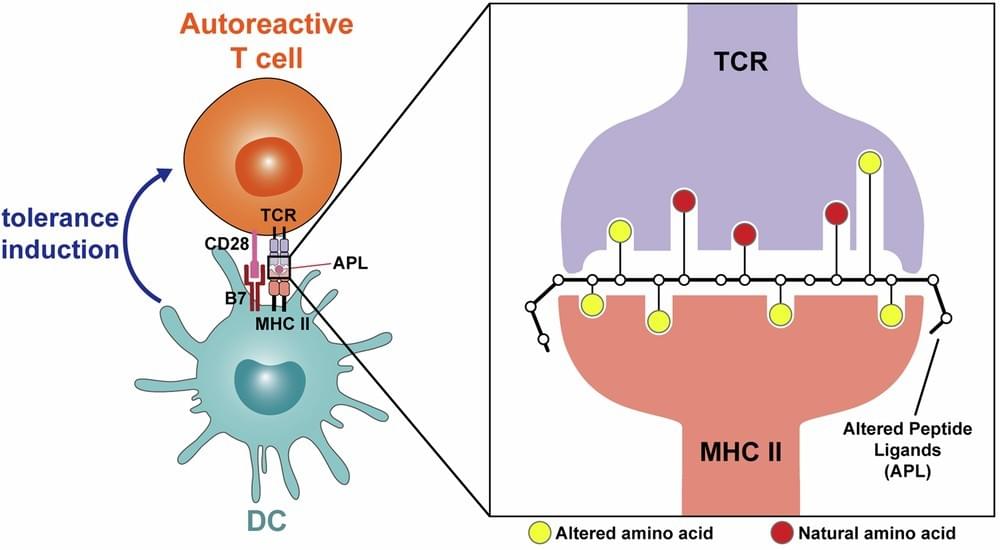
Full activation of naive T cells relies on three key signals: the first signal generated by the binding of TCR to peptide/MHC complexes, the second signal provided by co-stimulatory molecules, and the third signal mediated by cytokines and chemokines.
Under normal physiological conditions, autoantigens are taken up and presented by antigen-presenting cells, whereas soluble peptide/MHC complexes can act directly on T cells without providing co-stimulatory signals.
When T cells receive only the first signal in the absence of the second, they become anergic T cells. This process not only further suppresses immune responses but also prevents avidity maturation and enhanced aggressiveness of pathogenic T cells.
Due to their ability to selectively induce T cell anergy or immune tolerance, altered peptide ligands (APL) are mainly used for targeted therapy of autoimmune diseases, organ transplant rejection, and allergic diseases.
In addition, by optimizing antigen peptide structures to enhance T cell responses, APL can also serve as important components of tumor vaccines, holding significant value in precisely regulating immune responses and boosting anti-tumor immunity.
Song, Y., Li, J. & Wu, Y. Evolving understanding of autoimmune mechanisms and new therapeutic strategies of autoimmune disorders. Sig Transduct Target Ther 9, 263 (2024). https://doi.org/10.1038/s41392-024-01952-8