
Less is more for health and happiness

  • Home
  • Immune & Health
  • Diagnosis & Treatment
  • Heart & Soul
  • …  
    • Home
    • Immune & Health
    • Diagnosis & Treatment
    • Heart & Soul

Less is more for health and happiness

  • Home
  • Immune & Health
  • Diagnosis & Treatment
  • Heart & Soul
  • …  
    • Home
    • Immune & Health
    • Diagnosis & Treatment
    • Heart & Soul

Protecting the “Nerve Pathways” – Immune Tolerance Induction and Multiple Sclerosis

· science,mental health,art,treatment,diagnostics

Olive Oyl’s cousin Lena is a lively, cheerful girl—eighteen years old, an age when she should be enjoying her youth and chasing her dreams. But she’s been trapped by a terrible illness: multiple sclerosis. Since getting sick, Lena often feels dizzy, her hands and feet go numb and weak, and her eyesight is getting blurrier. Sometimes she can barely walk without stumbling. She’s become shy and quiet, even afraid to go out.

Olive Oyl’s cousin Lena is a lively, cheerful girl—eighteen years old, an age when she should be enjoying her youth and chasing her dreams. But she’s been trapped by a terrible illness: multiple sclerosis. Since getting sick, Lena often feels dizzy, her hands and feet go numb and weak, and her eyesight is getting blurrier. Sometimes she can barely walk without stumbling. She’s become shy and quiet, even afraid to go out. Olive Oyl felt worried seeing her cousin grow more and more depressed. She took Popeye and Bluto to visit Lena. Pushing open the door, Lena sat by the window, staring at the distant harbor with empty eyes, clutching a handkerchief tightly. “Lena, we’re here to see you,” Olive Oyl said softly, walking over and patting her shoulder gently. Lena turned around, seeing Popeye and Bluto, and forced a smile: “Popeye, Bluto—why are you here?” Popeye looked at her pale face, speaking gently: “Lena, we know you’re in pain, but don’t be afraid. We’re here to help. Your illness isn’t incurable—immune tolerance induction therapy can help you stand up again.” A glimmer of light appeared in Lena’s eyes, then faded quickly: “Really? The doctor said my nerves are damaged and will never recover.” Popeye shook his head: “That’s not true, Lena. Your nerves aren’t completely damaged—your immune patrol just ‘made a mistake,’ attacking the myelin sheath around your nerves. Myelin is like the ‘insulation layer’ around nerve fibers, just like the protective cover around the harbor’s communication lines. Once it’s damaged, nerve signals can’t pass normally, which is why you feel dizzy, numb, and have blurry vision.” “Can immune tolerance induction therapy repair my myelin?” Lena asked eagerly. Popeye nodded: “Of course. Scientists will take key antigens from the myelin—like myelin basic protein—and make a low-dose preparation. Through subcutaneous injection, your immune patrol will get used to it slowly, realizing that myelin is one of their own and stopping the attack. At the same time, this treatment activates the Treg cells in your body, letting them control those confused patrolmen, stopping the attack on myelin so the damaged myelin can repair slowly. Then nerve signals can pass normally again.” Bluto quickly added: “Yeah, Lena! Just like when I had a seafood allergy—after ‘training,’ my immune patrol stopped mixing up the good guys. As long as you stick to the treatment, you’ll get better slowly. You’ll be able to walk around the dock and play by the sea with us again, just like before.” Tears filled Lena’s eyes, and she held Olive Oyl’s hand tightly: “Really? I can really stand up again?” “Absolutely!” Popeye said firmly. “This treatment takes time—about a few months to see obvious results—but as long as you stick with it and don’t give up, you’ll get rid of the illness. Just like I eat spinach and work out every day to stay strong, you can too.” Lena looked at Popeye’s firm eyes and smiled—a real smile, the first in a long time: “Okay, I’ll listen to you. I’ll stick to the treatment and stand up again.” Olive Oyl smiled too: “Great, Lena! We’ll be with you the whole time. Next episode, Popeye will introduce us to an even more amazing treatment—cell therapy. It can help you get healthy faster and more accurately.”

Olive Oyl felt worried seeing her cousin grow more and more depressed. She took Popeye and Bluto to visit Lena. Pushing open the door, Lena sat by the window, staring at the distant harbor with empty eyes, clutching a handkerchief tightly. “Lena, we’re here to see you,” Olive Oyl said softly, walking over and patting her shoulder gently.

Lena turned around, seeing Popeye and Bluto, and forced a smile: “Popeye, Bluto—why are you here?” Popeye looked at her pale face, speaking gently: “Lena, we know you’re in pain, but don’t be afraid. We’re here to help. Your illness isn’t incurable—immune tolerance induction therapy can help you stand up again.”

A glimmer of light appeared in Lena’s eyes, then faded quickly: “Really? The doctor said my nerves are damaged and will never recover.” Popeye shook his head: “That’s not true, Lena. Your nerves aren’t completely damaged—your immune patrol just ‘made a mistake,’ attacking the myelin sheath around your nerves. Myelin is like the ‘insulation layer’ around nerve fibers, just like the protective cover around the harbor’s communication lines. Once it’s damaged, nerve signals can’t pass normally, which is why you feel dizzy, numb, and have blurry vision.”

“Can immune tolerance induction therapy repair my myelin?” Lena asked eagerly. Popeye nodded: “Of course. Scientists will take key antigens from the myelin—like myelin basic protein—and make a low-dose preparation. Through subcutaneous injection, your immune patrol will get used to it slowly, realizing that myelin is one of their own and stopping the attack. At the same time, this treatment activates the Treg cells in your body, letting them control those confused patrolmen, stopping the attack on myelin so the damaged myelin can repair slowly. Then nerve signals can pass normally again.”

Bluto quickly added: “Yeah, Lena! Just like when I had a seafood allergy—after ‘training,’ my immune patrol stopped mixing up the good guys. As long as you stick to the treatment, you’ll get better slowly. You’ll be able to walk around the dock and play by the sea with us again, just like before.”

Tears filled Lena’s eyes, and she held Olive Oyl’s hand tightly: “Really? I can really stand up again?” “Absolutely!” Popeye said firmly. “This treatment takes time—about a few months to see obvious results—but as long as you stick with it and don’t give up, you’ll get rid of the illness. Just like I eat spinach and work out every day to stay strong, you can too.”

Lena looked at Popeye’s firm eyes and smiled—a real smile, the first in a long time: “Okay, I’ll listen to you. I’ll stick to the treatment and stand up again.” Olive Oyl smiled too: “Great, Lena! We’ll be with you the whole time. Next episode, Popeye will introduce us to an even more amazing treatment—cell therapy. It can help you get healthy faster and more accurately.”

Science behind:

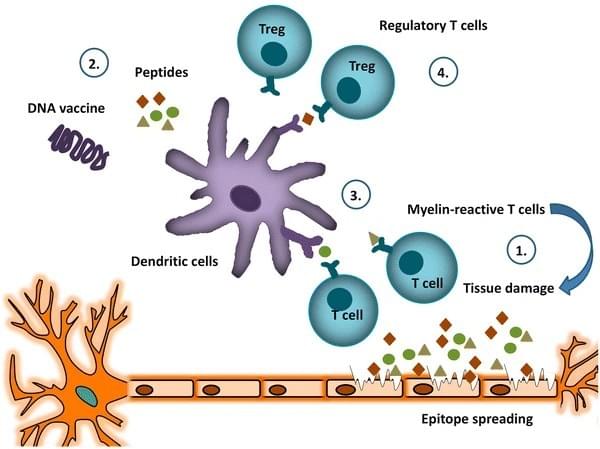
Possible modes of action of tolerance-inducing therapeutic approaches in multiple sclerosis (MS).
Olive Oyl’s cousin Lena is a lively, cheerful girl—eighteen years old, an age when she should be enjoying her youth and chasing her dreams. But she’s been trapped by a terrible illness: multiple sclerosis. Since getting sick, Lena often feels dizzy, her hands and feet go numb and weak, and her eyesight is getting blurrier. Sometimes she can barely walk without stumbling. She’s become shy and quiet, even afraid to go out. Olive Oyl felt worried seeing her cousin grow more and more depressed. She took Popeye and Bluto to visit Lena. Pushing open the door, Lena sat by the window, staring at the distant harbor with empty eyes, clutching a handkerchief tightly. “Lena, we’re here to see you,” Olive Oyl said softly, walking over and patting her shoulder gently. Lena turned around, seeing Popeye and Bluto, and forced a smile: “Popeye, Bluto—why are you here?” Popeye looked at her pale face, speaking gently: “Lena, we know you’re in pain, but don’t be afraid. We’re here to help. Your illness isn’t incurable—immune tolerance induction therapy can help you stand up again.” A glimmer of light appeared in Lena’s eyes, then faded quickly: “Really? The doctor said my nerves are damaged and will never recover.” Popeye shook his head: “That’s not true, Lena. Your nerves aren’t completely damaged—your immune patrol just ‘made a mistake,’ attacking the myelin sheath around your nerves. Myelin is like the ‘insulation layer’ around nerve fibers, just like the protective cover around the harbor’s communication lines. Once it’s damaged, nerve signals can’t pass normally, which is why you feel dizzy, numb, and have blurry vision.” “Can immune tolerance induction therapy repair my myelin?” Lena asked eagerly. Popeye nodded: “Of course. Scientists will take key antigens from the myelin—like myelin basic protein—and make a low-dose preparation. Through subcutaneous injection, your immune patrol will get used to it slowly, realizing that myelin is one of their own and stopping the attack. At the same time, this treatment activates the Treg cells in your body, letting them control those confused patrolmen, stopping the attack on myelin so the damaged myelin can repair slowly. Then nerve signals can pass normally again.” Bluto quickly added: “Yeah, Lena! Just like when I had a seafood allergy—after ‘training,’ my immune patrol stopped mixing up the good guys. As long as you stick to the treatment, you’ll get better slowly. You’ll be able to walk around the dock and play by the sea with us again, just like before.” Tears filled Lena’s eyes, and she held Olive Oyl’s hand tightly: “Really? I can really stand up again?” “Absolutely!” Popeye said firmly. “This treatment takes time—about a few months to see obvious results—but as long as you stick with it and don’t give up, you’ll get rid of the illness. Just like I eat spinach and work out every day to stay strong, you can too.” Lena looked at Popeye’s firm eyes and smiled—a real smile, the first in a long time: “Okay, I’ll listen to you. I’ll stick to the treatment and stand up again.” Olive Oyl smiled too: “Great, Lena! We’ll be with you the whole time. Next episode, Popeye will introduce us to an even more amazing treatment—cell therapy. It can help you get healthy faster and more accurately.”

Possible modes of action of tolerance-inducing therapeutic approaches in multiple sclerosis (MS). (1) Although the exact cause of MS remains unknown, proteins within the axon-surrounding myelin sheath, such as myelin oligodendrocyte protein (MOG), myelin basic protein (MBP), and proteolipid protein (PLP), are important targets of the autoreactive immune response. Furthermore, the progression of MS and the occurrence of relapses are associated with “epitope spreading,” a process characterized by loss of tolerance against endogenous antigens released during an inflammatory or auto-immune exacerbation. (2) Following administration, myelin-derived antigens, such as peptides, apitopes, or encoded by a DNA vaccine, are engulfed, processed, and presented by antigen-presenting cells, including Langerhans cells and DCs. (3) Presentation of myelin-derived antigen by DCs in the absence of costimulatory molecules, may result in the deletion of myelin-reactive T cells. (4) In addition, tolerance-inducing therapeutic approaches can induce so-called infectious tolerance by antigen-specific expansion of regulatory T cells (Treg) and are capable of counteracting epitope spreading

Willekens, B., Cools, N. Beyond the Magic Bullet: Current Progress of Therapeutic Vaccination in Multiple Sclerosis. CNS Drugs 32, 401–410 (2018). https://doi.org/10.1007/s40263-018-0518-4

Previous
Fighting the “Joint Killer” – Immune Tolerance Induction...
Next
The Amazing “Cell Therapy” – A New Direction in Immune...
 Return to site
Cookie Use
We use cookies to improve browsing experience, security, and data collection. By accepting, you agree to the use of cookies for advertising and analytics. You can change your cookie settings at any time. Learn More
Accept all
Settings
Decline All
Cookie Settings
Necessary Cookies
These cookies enable core functionality such as security, network management, and accessibility. These cookies can’t be switched off.
Analytics Cookies
These cookies help us better understand how visitors interact with our website and help us discover errors.
Preferences Cookies
These cookies allow the website to remember choices you've made to provide enhanced functionality and personalization.
Save