
Less is more for health and happiness

  • Home
  • Immune & Health
  • Diagnosis & Treatment
  • Heart & Soul
  • …  
    • Home
    • Immune & Health
    • Diagnosis & Treatment
    • Heart & Soul

Less is more for health and happiness

  • Home
  • Immune & Health
  • Diagnosis & Treatment
  • Heart & Soul
  • …  
    • Home
    • Immune & Health
    • Diagnosis & Treatment
    • Heart & Soul

Tang Dynasty Poetic Healing: Li Bai’s Drinking Alone by Moonlight — Making Peace with Yourself, Enjoying Solitude, and Conquering the Fear of Loneliness

· art,philosophy

Tang Dynasty Poetic Healing: Erasing Modern Mental Friction and Cultivating a Life of Ease

Li Bai’s Drinking Alone by Moonlight — Making Peace with Yourself, Enjoying Solitude, and Conquering the Fear of Loneliness

I. The Original Poem

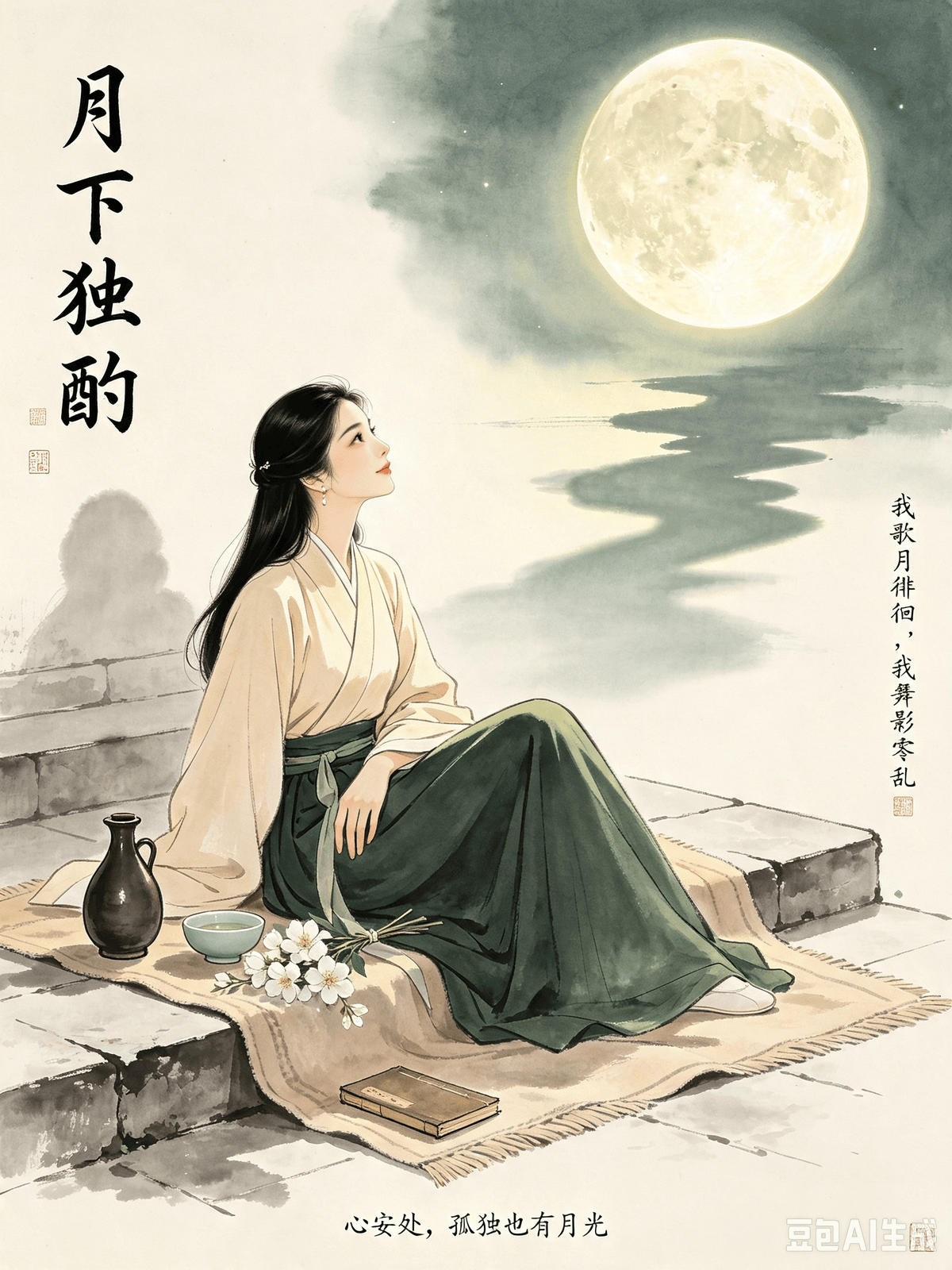
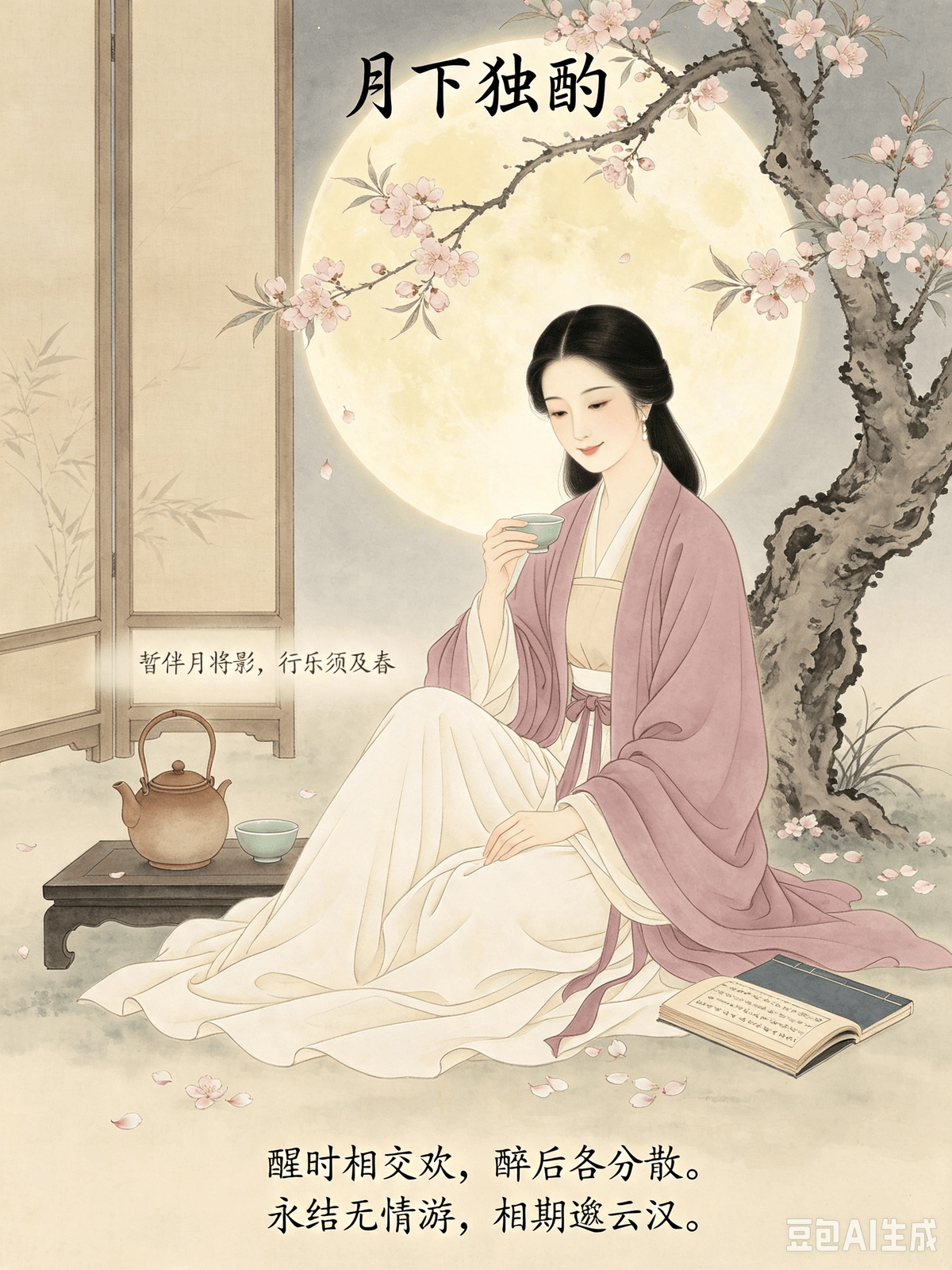
Drinking Alone by Moonlight (月下独酌·其一) Among the flowers, a single jug of wine; I drink alone, with no one to share. Raising my cup, I invite the bright moon; Facing my shadow, we become a party of three. The moon, alas, knows nothing of drinking; My shadow merely follows my form. Still, I'll take the moon and my shadow as friends; One must find joy while spring is here. I sing, and the moon lingers; I dance, and my shadow scatters. While awake, we share our joy; After drunkenness, we part our ways. Let us form a bond forever, free from worldly ties; And promise to meet again in the distant Milky Way.
Tang Dynasty Poetic Healing: Erasing Modern Mental Friction and Cultivating a Life of Ease Chapter 2: Li Bai’s Drinking Alone by Moonlight — Making Peace with Yourself, Enjoying Solitude, and Conquering the Fear of Loneliness I. The Original Poem Drinking Alone by Moonlight (月下独酌·其一) Among the flowers, a single jug of wine; I drink alone, with no one to share. Raising my cup, I invite the bright moon; Facing my shadow, we become a party of three. The moon, alas, knows nothing of drinking; My shadow merely follows my form. Still, I'll take the moon and my shadow as friends; One must find joy while spring is here. I sing, and the moon lingers; I dance, and my shadow scatters. While awake, we share our joy; After drunkenness, we part our ways. Let us form a bond forever, free from worldly ties; And promise to meet again in the distant Milky Way. II. Poetic Insight This poem was written during a low point in Li Bai’s career. Though he lived in Chang'an—the bustling, prosperous capital of the Tang Dynasty—he remained entirely unappreciated. Surrounded by elites, endless networking, and busy social gatherings, Li Bai found himself trapped in profound spiritual isolation. The people around him were mere acquaintances; no one understood his ambitions, and no one resonated with his true self. The noise belonged to the crowd, while the barrenness belonged to him. On a beautiful spring day, Li Bai set out wine to drink alone. From a conventional perspective, sitting without a single friend by your side is an awkward display of failure and isolation. Yet, Li Bai entirely bypassed society’s "rules of belonging." Instead, he achieved a masterclass in profound self-reconciliation and self-sufficiency. He raised his cup to invite the moon and his own shadow, transforming into a party of three to entertain himself. He knew perfectly well that the moon couldn't drink and his shadow could only mimic him—neither could offer empathy or deep conversation. Yet, he chose to align himself with nature. He let go of the obsession with finding a soulmate in the human world and stopped forcing others to understand him.  The core message of this poem is a powerful paradigm shift: stop seeking external validation and companionship, and start cultivating internal joy. Society fears being alone, equating solitude with being abandoned, unpopular, or socially awkward—treating "being by yourself" as a negative state. Li Bai reframes the meaning of solitude: Solitude is not loneliness; it is a retreat from the emotional drain of human interaction, a return to the freedom of your true self. He released the need for companionship, accepted that feeling misunderstood is simply a part of the human experience, and made peace with his own isolation. Without the need to cater to others or fake his emotions, he lived in the most relaxed, authentic way possible. This is the ultimate emotional anchor. III. Real-World Application In the modern world, the vast majority of our mental friction stems from two things: the fear of being alone, and the relentless pursuit of external validation.  In the workplace, we force ourselves into cliques, terrified of being marginalized. In our personal lives, we exhaust ourselves maintaining superficial networks because we are afraid to eat alone, shop alone, or spend holidays alone. When we feel down, we desperately seek someone to vent to, craving empathy and comfort. And when we don't get the response we want, we spiral into self-doubt, anxiety, and inadequacy. We have labeled solitude as "failure" and isolation as "desolation." We spend our lives chasing group acceptance, ultimately draining our minds and bodies, constantly burned out by interpersonal relationships. This poem is the ultimate antidote for modern social anxiety and the fear of missing out (FOMO). As a mindset consultant, here is how I recommend applying Li Bai’s wisdom: 1.	Reframe Solitude: Understand that being alone is never about being antisocial; it is high-level self-healing. Stop worrying about how others perceive you. Eating alone, going to the doctor alone, taking a walk alone, or spending a weekend solo are perfectly normal, liberating states of being. You do not need to feel sensitive or inferior about it. 2.	Stop Outsourcing Your Emotional Needs: Do not anchor your happiness to your friends, family, or partner. Everyone has their own life and cannot be a 24/7 sponge for your negative emotions. Forcing others to empathize will only lead to disappointment, resentment, and further mental exhaustion. Just as Li Bai didn't fixate on having human companions and instead let the moonlight heal him, we must learn to be self-sufficient in providing our own emotional warmth. 3.	Master Self-Reconciliation: You don’t need to force yourself to socialize in your free time. Adapt to your own rhythm—tend to your plants, go for a walk, listen to music, or read a book. If you face workplace exclusion or have a small circle of friends, don't bend over backward to please others, and don't doubt your worth. Life is, at its core, a solo journey. The noise of the crowd is temporary; solitude is lifelong. Embrace the moments when no one is by your side. Let go of your expectations of others, stop fighting with yourself, and enjoy the freedom of being alone. By doing so, you will completely break free from the anxiety of fitting in, distance yourself from relationship burnout, and live a life of profound ease and clarity.  Guérison poétique sous la dynastie Tang : Effacer les tensions mentales modernes et cultiver une vie sereine  Chapitre 2 : « Boire seul au clair de lune » de Li Bai — Faire la paix avec soi-même, savourer la solitude et vaincre la peur de la solitude  I. Le poème original « Boire seul au clair de lune » (月下独酌·其一) Parmi les fleurs, une simple cruche de vin ; je bois seul, sans personne avec qui partager. Levant ma coupe, j'invite la lune brillante ; face à mon ombre, nous ne sommes plus qu'un trio. La lune, hélas, ignore tout de la boisson ; mon ombre ne fait que suivre ma forme. Pourtant, je prendrai la lune et mon ombre comme amies ; il faut trouver la joie tant que le printemps est là. Je chante, et la lune s'attarde ; je danse, et mon ombre se disperse. Éveillés, nous partageons notre joie ; après l'ivresse, nous nous séparons. Formons un lien éternel, libre des attaches terrestres ; Et promettons-nous de nous revoir dans la lointaine Voie lactée.  II. Réflexion poétique Ce poème fut écrit durant une période difficile de la carrière de Li Bai. Bien qu'il vécût à Chang'an, capitale prospère et animée de la dynastie Tang, il demeurait totalement méconnu. Entouré d'élites, de réseaux sociaux incessants et de réceptions mondaines, Li Bai se sentait prisonnier d'un profond isolement spirituel. Les gens qui l'entouraient n'étaient que de simples connaissances ; personne ne comprenait ses ambitions, et personne ne ressentait sa véritable nature. Le bruit appartenait à la foule, tandis que la solitude lui appartenait.  Par une belle journée de printemps, Li Bai se servit du vin pour boire seul. D'un point de vue conventionnel, être assis sans un seul ami à ses côtés est une manifestation gênante d'échec et d'isolement. Pourtant, Li Bai s'affranchit totalement des conventions sociales. Au contraire, il fit preuve d'une profonde paix intérieure et d'une grande autonomie.  Il leva sa coupe pour inviter la lune et son ombre, se transformant ainsi en un trio pour se divertir. Il savait pertinemment que la lune ne pouvait boire et que son ombre ne pouvait que l'imiter – aucune des deux ne pouvait lui offrir d'empathie ni de conversation profonde. Pourtant, il choisit de s'harmoniser avec la nature. Il abandonna l'obsession de trouver une âme sœur parmi les humains et cessa de forcer les autres à le comprendre.  Le message central de ce poème est un puissant changement de paradigme : cesser de rechercher la validation et la compagnie extérieures et commencer à cultiver la joie intérieure. La société craint la solitude, l'assimilant à l'abandon, à l'impopularité ou à la maladresse sociale – considérant « être seul » comme un état négatif. Li Bai redéfinit le sens de la solitude : la solitude n'est pas l'isolement ; c'est un refuge face à l'épuisement émotionnel des interactions humaines, un retour à la liberté de son être véritable. Il se libéra du besoin de compagnie, accepta que le sentiment d'être incompris fasse simplement partie de l'expérience humaine et fit la paix avec son propre isolement. Sans avoir besoin de plaire aux autres ni de feindre ses émotions, il vécut de la manière la plus détendue et authentique qui soit. C'est l'ancrage émotionnel ultime.  III. Application concrète  Dans le monde moderne, la grande majorité de nos tensions psychologiques proviennent de deux choses : la peur de la solitude et la quête incessante de validation extérieure.  Au travail, nous nous contraignons à former des clans, terrifiés à l’idée d’être marginalisés. Dans notre vie personnelle, nous nous épuisons à entretenir des relations superficielles, car nous avons peur de manger, de faire les courses ou de passer les fêtes seuls. Lorsque nous avons le moral à zéro, nous cherchons désespérément quelqu’un à qui nous confier, avides d’empathie et de réconfort. Et lorsque nous n’obtenons pas la réponse escomptée, nous sombrons dans le doute, l’anxiété et un sentiment d’inadéquation. Nous avons assimilé la solitude à un « échec » et l’isolement à un « désolation ». Nous passons notre vie à rechercher l’approbation du groupe, ce qui finit par nous épuiser physiquement et mentalement, constamment à bout de souffle par les relations interpersonnelles.  Ce poème est l’antidote ultime à l’anxiété sociale moderne et à la peur de manquer quelque chose (FOMO). En tant que consultante en développement personnel, voici comment je recommande d'appliquer la sagesse de Li Bai :  1. Repenser la solitude : Comprendre qu'être seul n'est jamais synonyme d'asocialité ; c'est au contraire une forme profonde de guérison intérieure. Cessez de vous soucier du regard des autres. Manger seul, aller chez le médecin seul, se promener seul ou passer un week-end en solitaire sont des états d'être parfaitement normaux et libérateurs. Vous n'avez pas à vous sentir susceptible ou inférieur à ce sujet.  2. Cessez de déléguer vos besoins émotionnels : Ne faites pas dépendre votre bonheur de vos amis, de votre famille ou de votre partenaire. Chacun a sa propre vie et ne peut pas absorber vos émotions négatives 24 h/24 et 7 j/7. Forcer les autres à faire preuve d'empathie ne fera que vous décevoir, vous créer du ressentiment et vous épuiser mentalement. Tout comme Li Bai ne cherchait pas à avoir de compagnons humains et laissait le clair de lune le guérir, nous devons apprendre à être autonomes pour nous apporter notre propre réconfort émotionnel.  3. Cultiver la paix intérieure : Vous n'avez pas besoin de vous forcer à socialiser pendant votre temps libre. Adaptez-vous à votre propre rythme : prenez soin de vos plantes, faites une promenade, écoutez de la musique ou lisez un livre. Si vous êtes victime d'exclusion au travail ou si votre cercle d'amis est restreint, ne vous laissez pas abattre.

II. Poetic Insight

This poem was written during a low point in Li Bai’s career. Though he lived in Chang'an—the bustling, prosperous capital of the Tang Dynasty—he remained entirely unappreciated. Surrounded by elites, endless networking, and busy social gatherings, Li Bai found himself trapped in profound spiritual isolation. The people around him were mere acquaintances; no one understood his ambitions, and no one resonated with his true self. The noise belonged to the crowd, while the barrenness belonged to him.

On a beautiful spring day, Li Bai set out wine to drink alone. From a conventional perspective, sitting without a single friend by your side is an awkward display of failure and isolation. Yet, Li Bai entirely bypassed society’s "rules of belonging." Instead, he achieved a masterclass in profound self-reconciliation and self-sufficiency.

He raised his cup to invite the moon and his own shadow, transforming into a party of three to entertain himself. He knew perfectly well that the moon couldn't drink and his shadow could only mimic him—neither could offer empathy or deep conversation. Yet, he chose to align himself with nature. He let go of the obsession with finding a soulmate in the human world and stopped forcing others to understand him.

The core message of this poem is a powerful paradigm shift: stop seeking external validation and companionship, and start cultivating internal joy. Society fears being alone, equating solitude with being abandoned, unpopular, or socially awkward—treating "being by yourself" as a negative state. Li Bai reframes the meaning of solitude: Solitude is not loneliness; it is a retreat from the emotional drain of human interaction, a return to the freedom of your true self. He released the need for companionship, accepted that feeling misunderstood is simply a part of the human experience, and made peace with his own isolation. Without the need to cater to others or fake his emotions, he lived in the most relaxed, authentic way possible. This is the ultimate emotional anchor.

III. Real-World Application

In the modern world, the vast majority of our mental friction stems from two things: the fear of being alone, and the relentless pursuit of external validation.

In the workplace, we force ourselves into cliques, terrified of being marginalized. In our personal lives, we exhaust ourselves maintaining superficial networks because we are afraid to eat alone, shop alone, or spend holidays alone. When we feel down, we desperately seek someone to vent to, craving empathy and comfort. And when we don't get the response we want, we spiral into self-doubt, anxiety, and inadequacy. We have labeled solitude as "failure" and isolation as "desolation." We spend our lives chasing group acceptance, ultimately draining our minds and bodies, constantly burned out by interpersonal relationships.

This poem is the ultimate antidote for modern social anxiety and the fear of missing out (FOMO). As a mindset consultant, here is how I recommend applying Li Bai’s wisdom:

1. Reframe Solitude: Understand that being alone is never about being antisocial; it is high-level self-healing. Stop worrying about how others perceive you. Eating alone, going to the doctor alone, taking a walk alone, or spending a weekend solo are perfectly normal, liberating states of being. You do not need to feel sensitive or inferior about it.

2. Stop Outsourcing Your Emotional Needs: Do not anchor your happiness to your friends, family, or partner. Everyone has their own life and cannot be a 24/7 sponge for your negative emotions. Forcing others to empathize will only lead to disappointment, resentment, and further mental exhaustion. Just as Li Bai didn't fixate on having human companions and instead let the moonlight heal him, we must learn to be self-sufficient in providing our own emotional warmth.

3. Master Self-Reconciliation: You don’t need to force yourself to socialize in your free time. Adapt to your own rhythm—tend to your plants, go for a walk, listen to music, or read a book. If you face workplace exclusion or have a small circle of friends, don't bend over backward to please others, and don't doubt your worth.

Life is, at its core, a solo journey. The noise of the crowd is temporary; solitude is lifelong. Embrace the moments when no one is by your side. Let go of your expectations of others, stop fighting with yourself, and enjoy the freedom of being alone. By doing so, you will completely break free from the anxiety of fitting in, distance yourself from relationship burnout, and live a life of profound ease and clarity.

French version:

Guérison poétique sous la dynastie Tang : Effacer les tensions mentales modernes et cultiver une vie sereine

« Boire seul au clair de lune » de Li Bai — Faire la paix avec soi-même, savourer la solitude et vaincre la peur de la solitude

I. Le poème original

« Boire seul au clair de lune » (月下独酌·其一) Parmi les fleurs, une simple cruche de vin ; je bois seul, sans personne avec qui partager. Levant ma coupe, j'invite la lune brillante ; face à mon ombre, nous ne sommes plus qu'un trio. La lune, hélas, ignore tout de la boisson ; mon ombre ne fait que suivre ma forme. Pourtant, je prendrai la lune et mon ombre comme amies ; il faut trouver la joie tant que le printemps est là. Je chante, et la lune s'attarde ; je danse, et mon ombre se disperse. Éveillés, nous partageons notre joie ; après l'ivresse, nous nous séparons. Formons un lien éternel, libre des attaches terrestres ; Et promettons-nous de nous revoir dans la lointaine Voie lactée.

II. Réflexion poétique

Ce poème fut écrit durant une période difficile de la carrière de Li Bai. Bien qu'il vécût à Chang'an, capitale prospère et animée de la dynastie Tang, il demeurait totalement méconnu. Entouré d'élites, de réseaux sociaux incessants et de réceptions mondaines, Li Bai se sentait prisonnier d'un profond isolement spirituel. Les gens qui l'entouraient n'étaient que de simples connaissances ; personne ne comprenait ses ambitions, et personne ne ressentait sa véritable nature. Le bruit appartenait à la foule, tandis que la solitude lui appartenait.

Par une belle journée de printemps, Li Bai se servit du vin pour boire seul. D'un point de vue conventionnel, être assis sans un seul ami à ses côtés est une manifestation gênante d'échec et d'isolement. Pourtant, Li Bai s'affranchit totalement des conventions sociales. Au contraire, il fit preuve d'une profonde paix intérieure et d'une grande autonomie.

Il leva sa coupe pour inviter la lune et son ombre, se transformant ainsi en un trio pour se divertir. Il savait pertinemment que la lune ne pouvait boire et que son ombre ne pouvait que l'imiter – aucune des deux ne pouvait lui offrir d'empathie ni de conversation profonde. Pourtant, il choisit de s'harmoniser avec la nature. Il abandonna l'obsession de trouver une âme sœur parmi les humains et cessa de forcer les autres à le comprendre.

Le message central de ce poème est un puissant changement de paradigme : cesser de rechercher la validation et la compagnie extérieures et commencer à cultiver la joie intérieure. La société craint la solitude, l'assimilant à l'abandon, à l'impopularité ou à la maladresse sociale – considérant « être seul » comme un état négatif. Li Bai redéfinit le sens de la solitude : la solitude n'est pas l'isolement ; c'est un refuge face à l'épuisement émotionnel des interactions humaines, un retour à la liberté de son être véritable. Il se libéra du besoin de compagnie, accepta que le sentiment d'être incompris fasse simplement partie de l'expérience humaine et fit la paix avec son propre isolement. Sans avoir besoin de plaire aux autres ni de feindre ses émotions, il vécut de la manière la plus détendue et authentique qui soit. C'est l'ancrage émotionnel ultime.
Tang Dynasty Poetic Healing: Erasing Modern Mental Friction and Cultivating a Life of Ease Chapter 2: Li Bai’s Drinking Alone by Moonlight — Making Peace with Yourself, Enjoying Solitude, and Conquering the Fear of Loneliness I. The Original Poem Drinking Alone by Moonlight (月下独酌·其一) Among the flowers, a single jug of wine; I drink alone, with no one to share. Raising my cup, I invite the bright moon; Facing my shadow, we become a party of three. The moon, alas, knows nothing of drinking; My shadow merely follows my form. Still, I'll take the moon and my shadow as friends; One must find joy while spring is here. I sing, and the moon lingers; I dance, and my shadow scatters. While awake, we share our joy; After drunkenness, we part our ways. Let us form a bond forever, free from worldly ties; And promise to meet again in the distant Milky Way. II. Poetic Insight This poem was written during a low point in Li Bai’s career. Though he lived in Chang'an—the bustling, prosperous capital of the Tang Dynasty—he remained entirely unappreciated. Surrounded by elites, endless networking, and busy social gatherings, Li Bai found himself trapped in profound spiritual isolation. The people around him were mere acquaintances; no one understood his ambitions, and no one resonated with his true self. The noise belonged to the crowd, while the barrenness belonged to him. On a beautiful spring day, Li Bai set out wine to drink alone. From a conventional perspective, sitting without a single friend by your side is an awkward display of failure and isolation. Yet, Li Bai entirely bypassed society’s "rules of belonging." Instead, he achieved a masterclass in profound self-reconciliation and self-sufficiency. He raised his cup to invite the moon and his own shadow, transforming into a party of three to entertain himself. He knew perfectly well that the moon couldn't drink and his shadow could only mimic him—neither could offer empathy or deep conversation. Yet, he chose to align himself with nature. He let go of the obsession with finding a soulmate in the human world and stopped forcing others to understand him.  The core message of this poem is a powerful paradigm shift: stop seeking external validation and companionship, and start cultivating internal joy. Society fears being alone, equating solitude with being abandoned, unpopular, or socially awkward—treating "being by yourself" as a negative state. Li Bai reframes the meaning of solitude: Solitude is not loneliness; it is a retreat from the emotional drain of human interaction, a return to the freedom of your true self. He released the need for companionship, accepted that feeling misunderstood is simply a part of the human experience, and made peace with his own isolation. Without the need to cater to others or fake his emotions, he lived in the most relaxed, authentic way possible. This is the ultimate emotional anchor. III. Real-World Application In the modern world, the vast majority of our mental friction stems from two things: the fear of being alone, and the relentless pursuit of external validation.  In the workplace, we force ourselves into cliques, terrified of being marginalized. In our personal lives, we exhaust ourselves maintaining superficial networks because we are afraid to eat alone, shop alone, or spend holidays alone. When we feel down, we desperately seek someone to vent to, craving empathy and comfort. And when we don't get the response we want, we spiral into self-doubt, anxiety, and inadequacy. We have labeled solitude as "failure" and isolation as "desolation." We spend our lives chasing group acceptance, ultimately draining our minds and bodies, constantly burned out by interpersonal relationships. This poem is the ultimate antidote for modern social anxiety and the fear of missing out (FOMO). As a mindset consultant, here is how I recommend applying Li Bai’s wisdom: 1.	Reframe Solitude: Understand that being alone is never about being antisocial; it is high-level self-healing. Stop worrying about how others perceive you. Eating alone, going to the doctor alone, taking a walk alone, or spending a weekend solo are perfectly normal, liberating states of being. You do not need to feel sensitive or inferior about it. 2.	Stop Outsourcing Your Emotional Needs: Do not anchor your happiness to your friends, family, or partner. Everyone has their own life and cannot be a 24/7 sponge for your negative emotions. Forcing others to empathize will only lead to disappointment, resentment, and further mental exhaustion. Just as Li Bai didn't fixate on having human companions and instead let the moonlight heal him, we must learn to be self-sufficient in providing our own emotional warmth. 3.	Master Self-Reconciliation: You don’t need to force yourself to socialize in your free time. Adapt to your own rhythm—tend to your plants, go for a walk, listen to music, or read a book. If you face workplace exclusion or have a small circle of friends, don't bend over backward to please others, and don't doubt your worth. Life is, at its core, a solo journey. The noise of the crowd is temporary; solitude is lifelong. Embrace the moments when no one is by your side. Let go of your expectations of others, stop fighting with yourself, and enjoy the freedom of being alone. By doing so, you will completely break free from the anxiety of fitting in, distance yourself from relationship burnout, and live a life of profound ease and clarity.  Guérison poétique sous la dynastie Tang : Effacer les tensions mentales modernes et cultiver une vie sereine  Chapitre 2 : « Boire seul au clair de lune » de Li Bai — Faire la paix avec soi-même, savourer la solitude et vaincre la peur de la solitude  I. Le poème original « Boire seul au clair de lune » (月下独酌·其一) Parmi les fleurs, une simple cruche de vin ; je bois seul, sans personne avec qui partager. Levant ma coupe, j'invite la lune brillante ; face à mon ombre, nous ne sommes plus qu'un trio. La lune, hélas, ignore tout de la boisson ; mon ombre ne fait que suivre ma forme. Pourtant, je prendrai la lune et mon ombre comme amies ; il faut trouver la joie tant que le printemps est là. Je chante, et la lune s'attarde ; je danse, et mon ombre se disperse. Éveillés, nous partageons notre joie ; après l'ivresse, nous nous séparons. Formons un lien éternel, libre des attaches terrestres ; Et promettons-nous de nous revoir dans la lointaine Voie lactée.  II. Réflexion poétique Ce poème fut écrit durant une période difficile de la carrière de Li Bai. Bien qu'il vécût à Chang'an, capitale prospère et animée de la dynastie Tang, il demeurait totalement méconnu. Entouré d'élites, de réseaux sociaux incessants et de réceptions mondaines, Li Bai se sentait prisonnier d'un profond isolement spirituel. Les gens qui l'entouraient n'étaient que de simples connaissances ; personne ne comprenait ses ambitions, et personne ne ressentait sa véritable nature. Le bruit appartenait à la foule, tandis que la solitude lui appartenait.  Par une belle journée de printemps, Li Bai se servit du vin pour boire seul. D'un point de vue conventionnel, être assis sans un seul ami à ses côtés est une manifestation gênante d'échec et d'isolement. Pourtant, Li Bai s'affranchit totalement des conventions sociales. Au contraire, il fit preuve d'une profonde paix intérieure et d'une grande autonomie.  Il leva sa coupe pour inviter la lune et son ombre, se transformant ainsi en un trio pour se divertir. Il savait pertinemment que la lune ne pouvait boire et que son ombre ne pouvait que l'imiter – aucune des deux ne pouvait lui offrir d'empathie ni de conversation profonde. Pourtant, il choisit de s'harmoniser avec la nature. Il abandonna l'obsession de trouver une âme sœur parmi les humains et cessa de forcer les autres à le comprendre.  Le message central de ce poème est un puissant changement de paradigme : cesser de rechercher la validation et la compagnie extérieures et commencer à cultiver la joie intérieure. La société craint la solitude, l'assimilant à l'abandon, à l'impopularité ou à la maladresse sociale – considérant « être seul » comme un état négatif. Li Bai redéfinit le sens de la solitude : la solitude n'est pas l'isolement ; c'est un refuge face à l'épuisement émotionnel des interactions humaines, un retour à la liberté de son être véritable. Il se libéra du besoin de compagnie, accepta que le sentiment d'être incompris fasse simplement partie de l'expérience humaine et fit la paix avec son propre isolement. Sans avoir besoin de plaire aux autres ni de feindre ses émotions, il vécut de la manière la plus détendue et authentique qui soit. C'est l'ancrage émotionnel ultime.  III. Application concrète  Dans le monde moderne, la grande majorité de nos tensions psychologiques proviennent de deux choses : la peur de la solitude et la quête incessante de validation extérieure.  Au travail, nous nous contraignons à former des clans, terrifiés à l’idée d’être marginalisés. Dans notre vie personnelle, nous nous épuisons à entretenir des relations superficielles, car nous avons peur de manger, de faire les courses ou de passer les fêtes seuls. Lorsque nous avons le moral à zéro, nous cherchons désespérément quelqu’un à qui nous confier, avides d’empathie et de réconfort. Et lorsque nous n’obtenons pas la réponse escomptée, nous sombrons dans le doute, l’anxiété et un sentiment d’inadéquation. Nous avons assimilé la solitude à un « échec » et l’isolement à un « désolation ». Nous passons notre vie à rechercher l’approbation du groupe, ce qui finit par nous épuiser physiquement et mentalement, constamment à bout de souffle par les relations interpersonnelles.  Ce poème est l’antidote ultime à l’anxiété sociale moderne et à la peur de manquer quelque chose (FOMO). En tant que consultante en développement personnel, voici comment je recommande d'appliquer la sagesse de Li Bai :  1. Repenser la solitude : Comprendre qu'être seul n'est jamais synonyme d'asocialité ; c'est au contraire une forme profonde de guérison intérieure. Cessez de vous soucier du regard des autres. Manger seul, aller chez le médecin seul, se promener seul ou passer un week-end en solitaire sont des états d'être parfaitement normaux et libérateurs. Vous n'avez pas à vous sentir susceptible ou inférieur à ce sujet.  2. Cessez de déléguer vos besoins émotionnels : Ne faites pas dépendre votre bonheur de vos amis, de votre famille ou de votre partenaire. Chacun a sa propre vie et ne peut pas absorber vos émotions négatives 24 h/24 et 7 j/7. Forcer les autres à faire preuve d'empathie ne fera que vous décevoir, vous créer du ressentiment et vous épuiser mentalement. Tout comme Li Bai ne cherchait pas à avoir de compagnons humains et laissait le clair de lune le guérir, nous devons apprendre à être autonomes pour nous apporter notre propre réconfort émotionnel.  3. Cultiver la paix intérieure : Vous n'avez pas besoin de vous forcer à socialiser pendant votre temps libre. Adaptez-vous à votre propre rythme : prenez soin de vos plantes, faites une promenade, écoutez de la musique ou lisez un livre. Si vous êtes victime d'exclusion au travail ou si votre cercle d'amis est restreint, ne vous laissez pas abattre.

III. Application concrète

Dans le monde moderne, la grande majorité de nos tensions psychologiques proviennent de deux choses : la peur de la solitude et la quête incessante de validation extérieure.

Au travail, nous nous contraignons à former des clans, terrifiés à l’idée d’être marginalisés. Dans notre vie personnelle, nous nous épuisons à entretenir des relations superficielles, car nous avons peur de manger, de faire les courses ou de passer les fêtes seuls. Lorsque nous avons le moral à zéro, nous cherchons désespérément quelqu’un à qui nous confier, avides d’empathie et de réconfort. Et lorsque nous n’obtenons pas la réponse escomptée, nous sombrons dans le doute, l’anxiété et un sentiment d’inadéquation. Nous avons assimilé la solitude à un « échec » et l’isolement à un « désolation ». Nous passons notre vie à rechercher l’approbation du groupe, ce qui finit par nous épuiser physiquement et mentalement, constamment à bout de souffle par les relations interpersonnelles.

Ce poème est l’antidote ultime à l’anxiété sociale moderne et à la peur de manquer quelque chose (FOMO). En tant que consultante en développement personnel, voici comment je recommande d'appliquer la sagesse de Li Bai :

1. Repenser la solitude : Comprendre qu'être seul n'est jamais synonyme d'asocialité ; c'est au contraire une forme profonde de guérison intérieure. Cessez de vous soucier du regard des autres. Manger seul, aller chez le médecin seul, se promener seul ou passer un week-end en solitaire sont des états d'être parfaitement normaux et libérateurs. Vous n'avez pas à vous sentir susceptible ou inférieur à ce sujet.

2. Cessez de déléguer vos besoins émotionnels : Ne faites pas dépendre votre bonheur de vos amis, de votre famille ou de votre partenaire. Chacun a sa propre vie et ne peut pas absorber vos émotions négatives 24 h/24 et 7 j/7. Forcer les autres à faire preuve d'empathie ne fera que vous décevoir, vous créer du ressentiment et vous épuiser mentalement. Tout comme Li Bai ne cherchait pas à avoir de compagnons humains et laissait le clair de lune le guérir, nous devons apprendre à être autonomes pour nous apporter notre propre réconfort émotionnel.

3. Cultiver la paix intérieure : Vous n'avez pas besoin de vous forcer à socialiser pendant votre temps libre. Adaptez-vous à votre propre rythme : prenez soin de vos plantes, faites une promenade, écoutez de la musique ou lisez un livre. Si vous êtes victime d'exclusion au travail ou si votre cercle d'amis est restreint, ne vous laissez pas abattre.

Previous
Immunology Journey to the West The Lingering Danger of...
 Return to site
Profile picture
Cancel
Cookie Use
We use cookies to improve browsing experience, security, and data collection. By accepting, you agree to the use of cookies for advertising and analytics. You can change your cookie settings at any time. Learn More
Accept all
Settings
Decline All
Cookie Settings
These cookies enable core functionality such as security, network management, and accessibility. These cookies can’t be switched off.
These cookies help us better understand how visitors interact with our website and help us discover errors.
These cookies allow the website to remember choices you've made to provide enhanced functionality and personalization.
Save